
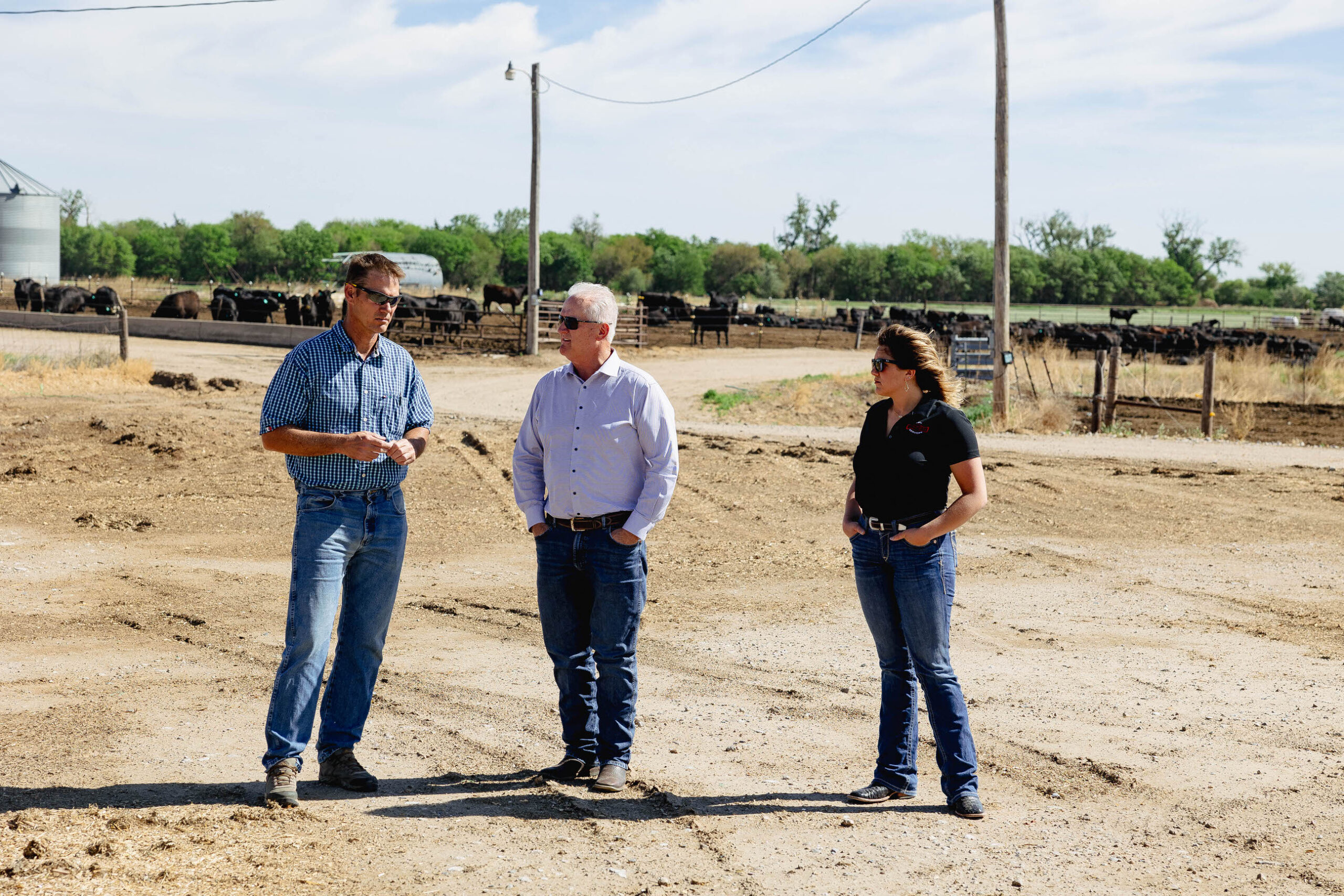
The Regional Conservation Partnership Program (RCPP) supports the scaling of conservation and regenerative agriculture practices that strengthen farms, ranches, and rural communities. Many of those same practices improve water quality, soil health, biodiversity and long-term productivity, outcomes that companies with agricultural supply chains are increasingly investing in to build resilience and, in some cases, support Scope 3 goals.
RCPP is built as a public-private partnership. Through the program, USDA’s Natural Resources Conservation Service (NRCS) works with partners to bring conservation funding and technical assistance to producers.
For companies, that creates an opportunity to stretch private investment further. Corporate goals around supply chain resilience often overlap with RCPP conservation priorities; and RCPP requires significant match from private industry. The challenge is getting from shared goals to a program that works on the ground.
RCPP applications and implementation require specialized conservation knowledge, producer relationships and systems that most corporate teams were never designed to manage. Building that capacity internally can pull significant time and resources away from the work those teams already own.
Four challenges tend to stand out:
- Local expertise matters. Applications need to connect conservation priorities with practices that make sense for producers in a specific geography.
- Application windows move quickly. Building budgets, confirming producer interest, securing partner commitments, and completing an application can put significant pressure on internal teams.
- NRCS and corporate requirements do not always align. Conservation practice standards, federal documentation, and corporate reporting requirements serve different purposes. Connecting them requires systems that can support both without creating unnecessary work for producers.
- Boots on the Ground are preferred. In the eyes of NRCS, ideal RCPP partners are already managing ongoing processes and approaches in regions of focus for recruitment, enrollment, data collection, technical assistance, practice verification, practice payments, NRCS compliance, and project reporting.
Technical Expertise Starts at the Field Level
A strong RCPP application is not simply a list of eligible conservation practices. It has to reflect what producers in that geography can realistically adopt and maintain.
A practice can meet a state conservation standard and still be a poor fit for the producers it is meant to serve. It may conflict with a crop rotation, lease term, grazing system, or the economics of the operation.
That is where local knowledge becomes critical.
A partner working directly with producers can help determine which practices have real demand before the application is submitted. They can also build incentive rates around local establishment costs, custom rates and the production risk producers may take on during the first few seasons.
Those details matter. If an incentive does not adequately account for the cost and risk of adoption, enrollment may fall short of projections. Even when a practice is adopted, it may not remain in place once the contract ends.
Long-term success depends on more than getting a producer enrolled. It requires technical assistance that continues through implementation and trusted advisors who understand the operation.

Why Companies Bring in an Outside Team
RCPP application windows leave little room to build a program from scratch.
An experienced partner can enter the process with producer interest already established, practice budgets developed, partner contributions mapped out and letters of commitment underway. A team that has worked through an award cycle also knows which pieces can happen simultaneously and which ones tend to slow an application down.
And receiving an award is only the beginning.
Once funding is available, the program needs to reach producers and move into implementation. That requires producer recruitment, technical advisors, contracting, practice verification, payment processes, data management, and reporting.
For a corporate sustainability team, developing that capability internally means learning an entirely different operating system: NRCS conservation practice standards, federal documentation requirements, producer contracting and field-level implementation. Meanwhile, quarterly reporting, supplier engagement, and the team’s other responsibilities do not stop.
Working with an experienced partner allows the company to stay focused on the decisions only it can make: its goals, funding commitment, priority geographies and desired supply chain outcomes. The partner can then translate those priorities into a program producers can actually use.
Maximizing a Company’s Investment in the Agriculture Supply Chain
One of RCPP’s biggest advantages is the ability to pair public and private investment.
When the two work together, a company’s dollars can reach more producers and support more conservation than private funding may be able to accomplish on its own. But maximizing that opportunity requires designing the program so federal requirements, corporate goals and producer needs work together from the beginning.
That is especially important when it comes to corporate sustainability outcomes.
NRCS documentation is designed to show that a conservation practice was implemented according to an established standard. A company tracking progress toward supply chain goals may need different data, measurements, quantifications, accounting approaches, verification exercises, protocol checks, and reporting preparation at the operation, field or herd level to truly generate corporate-aligned outcomes.
The requirements may be different, but much of that information comes from the same place: the producer.
A well-designed program can reduce duplication by building those needs into a single enrollment and implementation process. A producer should not have to provide the same information multiple times simply because two funding partners use it differently.
The same principle applies to conservation practice design. Meeting NRCS standards is essential, but successful implementation also depends on understanding how those standards translate to a working farm or ranch. Teams with technical conservation expertise and firsthand agricultural experience can bridge that gap, helping build programs that satisfy program requirements without losing sight of what producers can realistically implement.
That is ultimately where partnership creates the most value. RCPP can bring significant public resources into agricultural supply chains, but funding alone does not create impact. The program still has to work for the producer on the other side of the application.
Learn More About How AgSpire Can Help
AgSpire brings together agricultural, conservation and corporate sustainability expertise with experience designing and implementing privately and publicly funded programs across the United States.
We help partners move from supply chain goals to programs that work in the field, from application development and program design through producer enrollment, technical assistance, implementation and reporting.
To learn more about partnering with AgSpire on RCPP opportunities, call or text 605.625.7255 or email info@agspire.com.
Additional Links
Want to learn about AgSpire >>> Click Here
Ag Retailers have what CPGs Need. Here’s What’s Missing>>> Click Here