
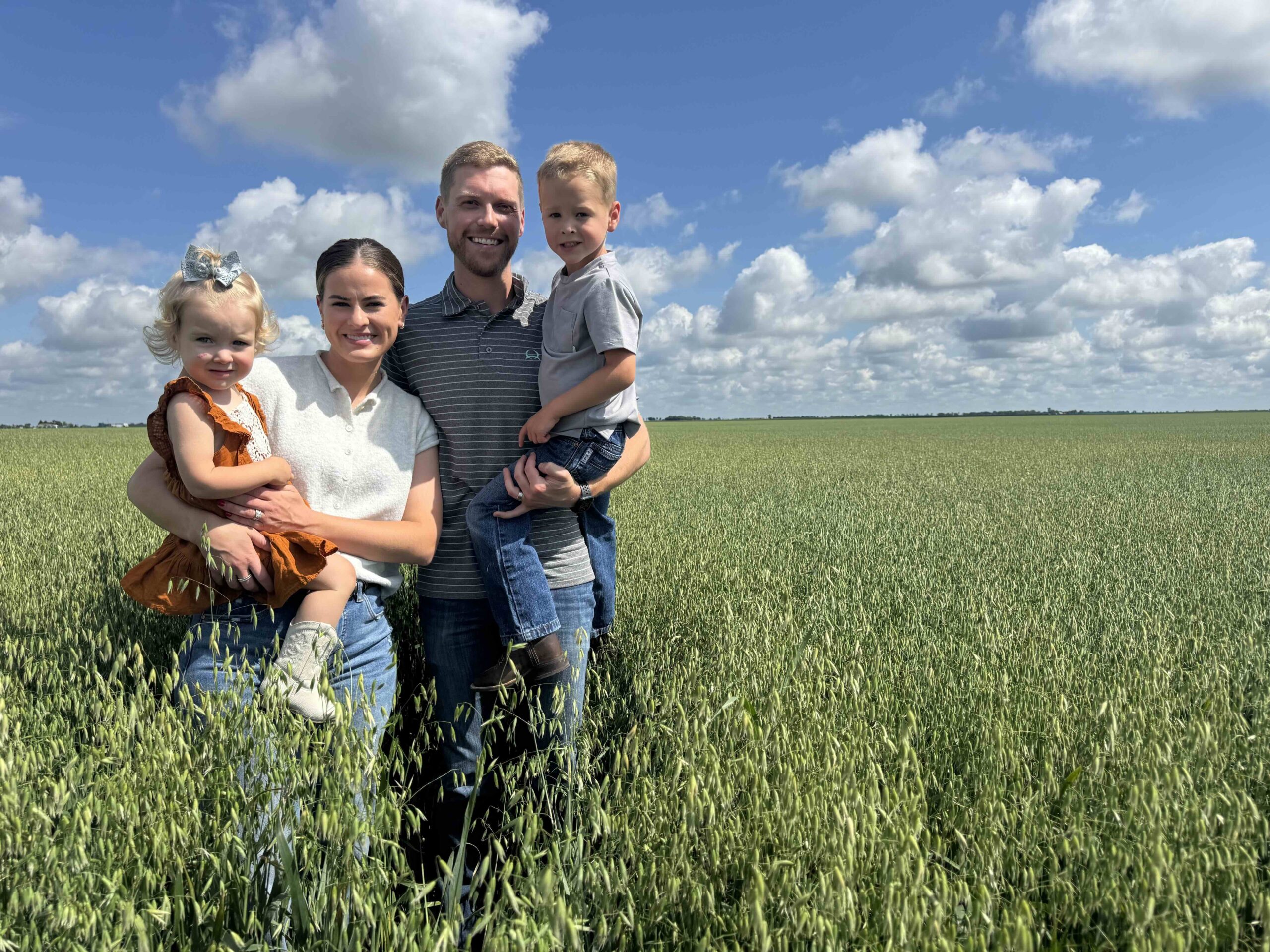
By Lura Roti for AgSpire
In the Boekelheide farm shop, a mission statement hangs on the wall above semitrucks and combines.
It reads: “Stewardship – Be stewards of our land, resources, people, friends, community and our faith. Leaving everything in a better way than we found it.”
A matching banner hangs in the air-conditioned room above where everyone on the farm team gathers for dinner each day.
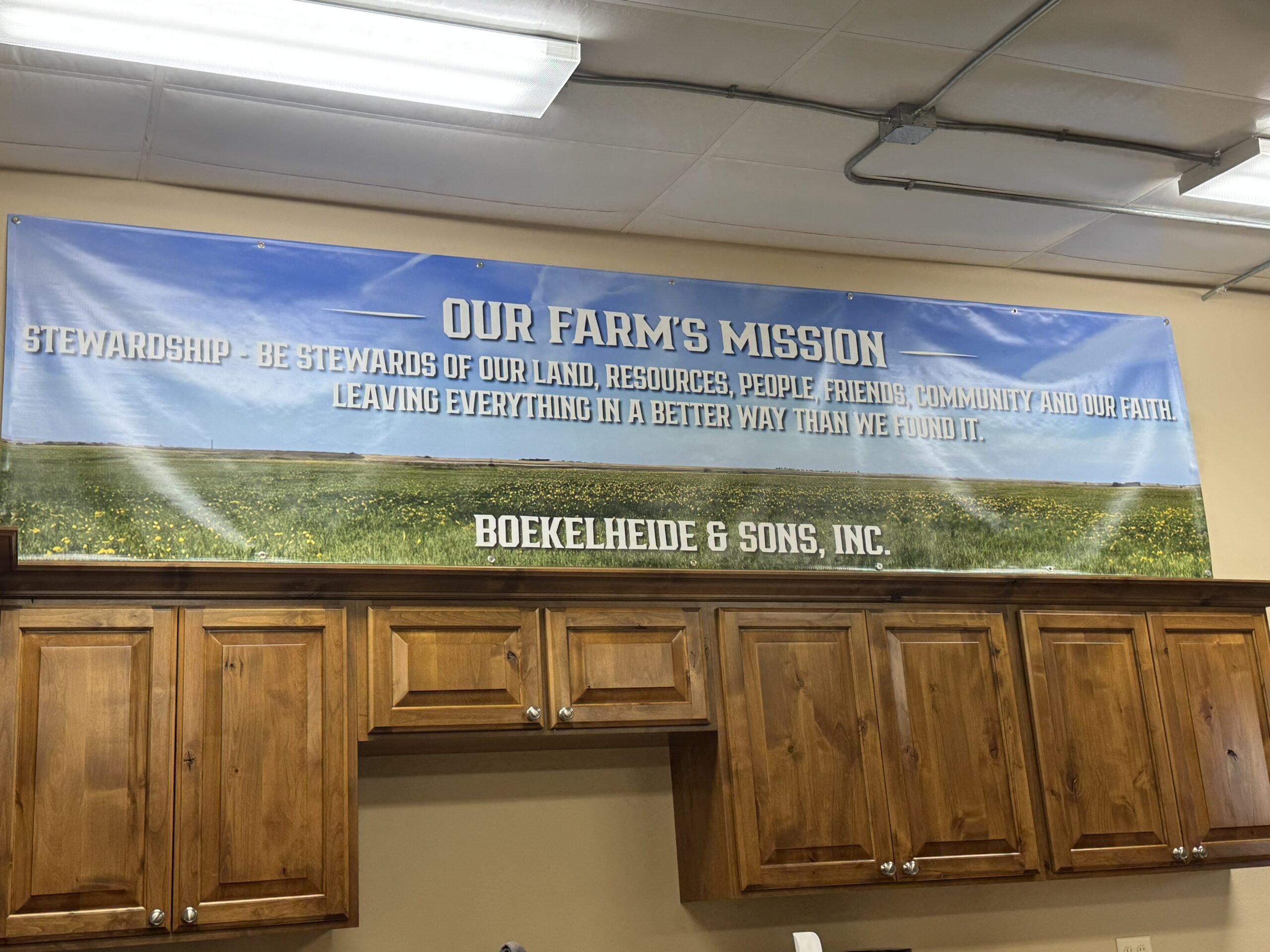
“We wanted a reminder for ourselves and the team we work with of “the why” – why we do what we do. Because whether you’re servicing something in the shop or making a big decision in the office, those fundamentals are the same,” said Alex Boekelheide, 33, of the farm mission he, his wife, Jenna and parents, Mark and Diane, crafted a few years after he returned home from Lake Area Technical College to farm fulltime.
For the Boekelheide family, their focus on stewardship does not compromise profit.
“We work to do things for the overall good of the land, our environment and wildlife. And ultimately, we run our farm as a business – to be profitable and provide for our family,” Boekelheide said. “We don’t lose sight of profitability, because you can have the healthiest soil in the world, but if you aren’t driving a profit from the acre, and you lose the farm because you didn’t do the right things, then you’re not being a steward of your resources.”
The Northville, South Dakota farmer further explained the strategy he and Mark deploy with their team when making field management decisions.
“We take a blended approach, making sure conservation practices are at the forefront and balancing out what we have to do to be a profitable business,” Boekelheide said. “A big piece of this is taking a three, to five, to 10-year approach instead of just a one-to-two-year approach. This bigger picture approach helps us focus on what the land is telling us.”
Listening to the land leads to diverse crop rotation
Located on the flatlands of the James River Valley, since the 2000’s the Boekelheide family primarily raised corn and soybeans on the farm their ancestors farmed more than a century ago.
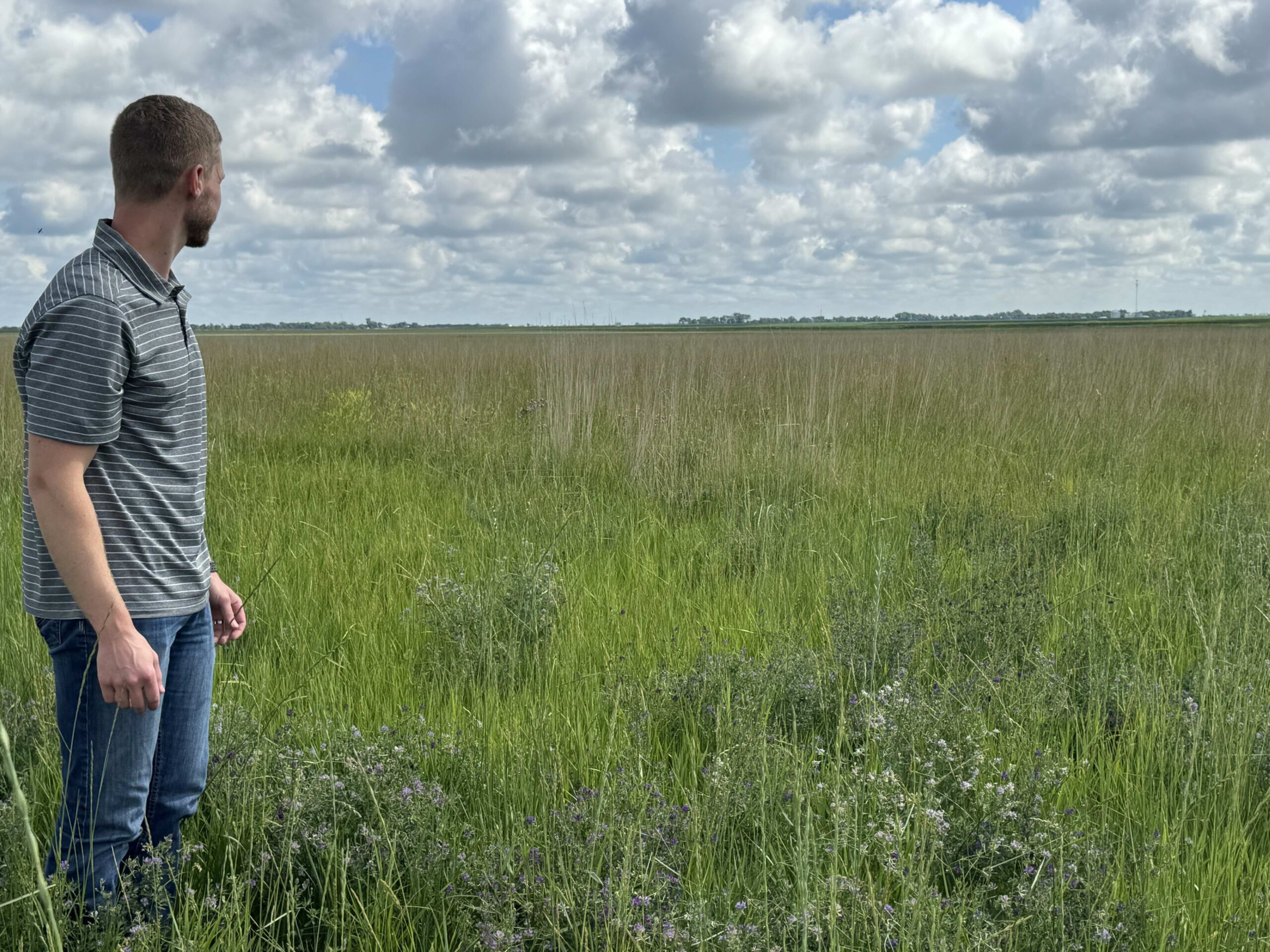
But expanding saline patches was their lands’ way of telling them it was time to change up the two-crop system and add diversity to their corn and soybean rotation.
“We knew we needed a more robust rotation to use up the water because soybeans do not use water efficiently. And we are so flat, there’s limited natural runoff,” Boekelheide said. “We’d had a few extremely wet years and when water just sits on the surface, instead of infiltrating the soil profile, it evaporates and leaves salt behind and as the saline accumulates, over time nothing can grow.”
Seeking advice, Boekelheide reached out to one of his Lake Area Technical College instructors, Jim Clendenin. Clendenin connected him with a resource team that included farmer-members of the South Dakota Soil Health Coalition.
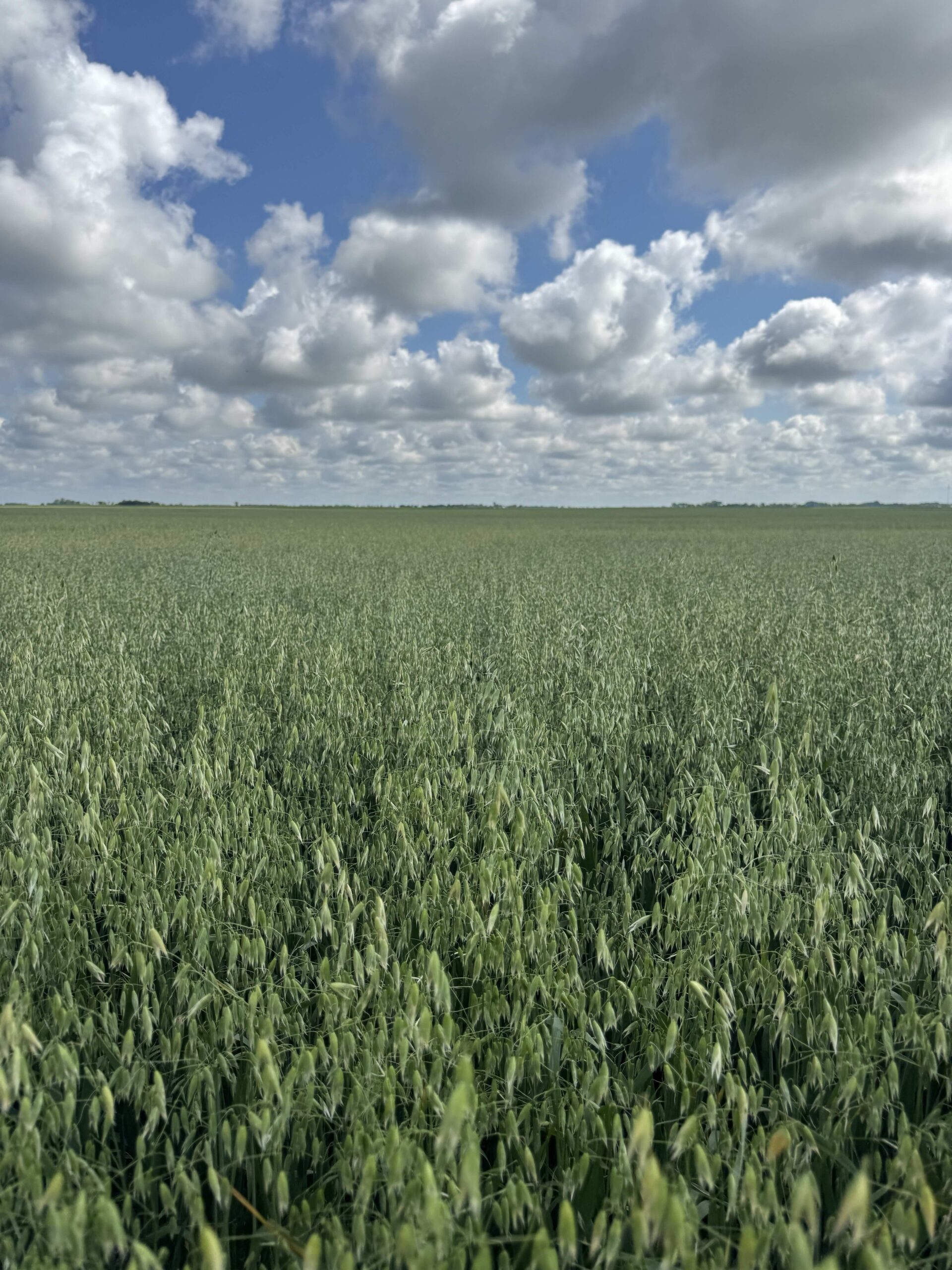
Sitting around a large table in the machine shop, they developed a field management plan that involved no-till/minimal tillage, adding oats followed by cover crops to a percentage of the farm’s corn and soybean rotation and implementing a five-year plan to rehabilitate the saline areas:
- Year 1 – plant to saline tolerant grasses
- Year 2 – leave alone
- Year 3 – hay
- Year 4 – leave alone
- Year 5 – hay
- Year 6 – re-introduce into a four-crop rotation of corn, soybeans, oats and cover crops
During the early phases of establishing their management plan, Boekelheide and Mark attended the three-day Soil Health School.
“What we learned was eye opening. It helped us shift our mindset, because what we thought we were doing right, in terms of field management, was actually making the water infiltration problem worse,” Boekelheide said. “It helped us develop not only a resilient cropping system, but a resilient mindset.”
Creating a resilient cropping system for the next generation
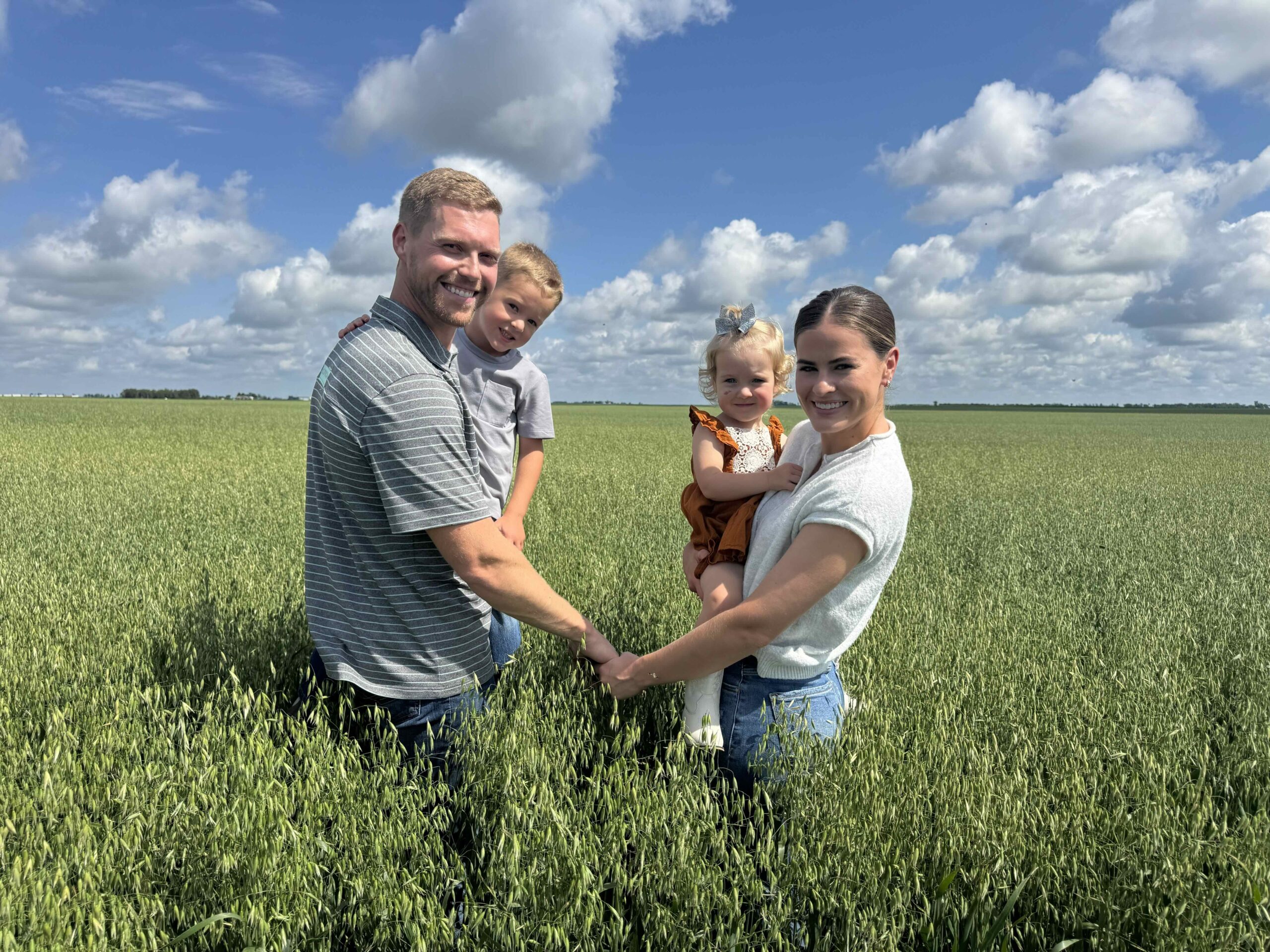
As a fifth-generation farmer with two young children, resilience is top of mind for Boekelheide. “There’s a lot of pressure, because through the leadership of previous generations, the farm weathered all the storms. I don’t want to be the generation to hand a set of problems off to the next generation. I want to hand off a farm that is thriving.”
He reflects on the 1980s Farm Crisis his family navigated.
“My dad tells about the conversation at the kitchen table when the banker told them to sell out,” Boekelheide said. “Instead, they buckled down and got creative to do whatever they could do to generate revenue to pay the bills.”
Growing up in the shadow of this challenging era, emphasized the importance to Boekelheide of having a great understanding of the operation’s financial position so decisions can be made that minimize risk. And because most risk management options are connected to corn and soybeans, he began looking for a way to make raising oats cashflow.
“Changing the crop rotation is uncomfortable because our crop insurance system is focused on corn and soybeans, so there isn’t the typical risk protection. And unlike corn and soybeans, unless you have wheat, there isn’t a robust local market for other small grains,” Boekelheide said. “But we kind of reached a point with the expanding saline areas in our fields where we realized that we had more at risk by not making any changes.”
He reached out to a few seed dealerships and began raising seed oats on contract.
It was a seed dealership who connected him with AgSpire, an organization that provides crop and livestock producers with access to practical incentives to help with technical advice and costs associated with a wide range of regenerative agriculture and conservation practices.
Based on his field management practices that promote soil health, and the farm’s goals, Boekelheide decided to enroll in AgSpire’s Covering America program. Through the program, he receives a premium on top of his contracted rate for each bushel of oats he sells as seed. And he receives a $35 per-acre seed incentive payment on every crop acre he enrolls in the program and plants to a cover crop at some point during the growing season.
The Covering America program is only a one-year commitment. AgSpire’s Senior Conservation Agronomist, Derek Ver Helst visited Boekelheide’s farm to review his conservation practices and help him with the paperwork.
“There are tremendous people within the organization that genuinely want to help you succeed,” Boekelheide said. “We had a great opportunity to partner with AgSpire to receive incentive dollars and with the one-year contract, I maintain 100 percent control and flexibility over every acre. We know we need to do these things for the long run. It’s nice to have a program that helps assist us to minimize the risk because farming is a high input, high output industry and the margins are thin.”
To learn more about the Boekelheide farm, watch the video below:
Hear from Alex
For fifth-generation South Dakota farmer Alex Boekelheide, the family motto is simple: leave everything better than you found it. But that is harder said than done. In this short video, Alex shares how AgSpire's programs offered support and incentives to promote his operation.