
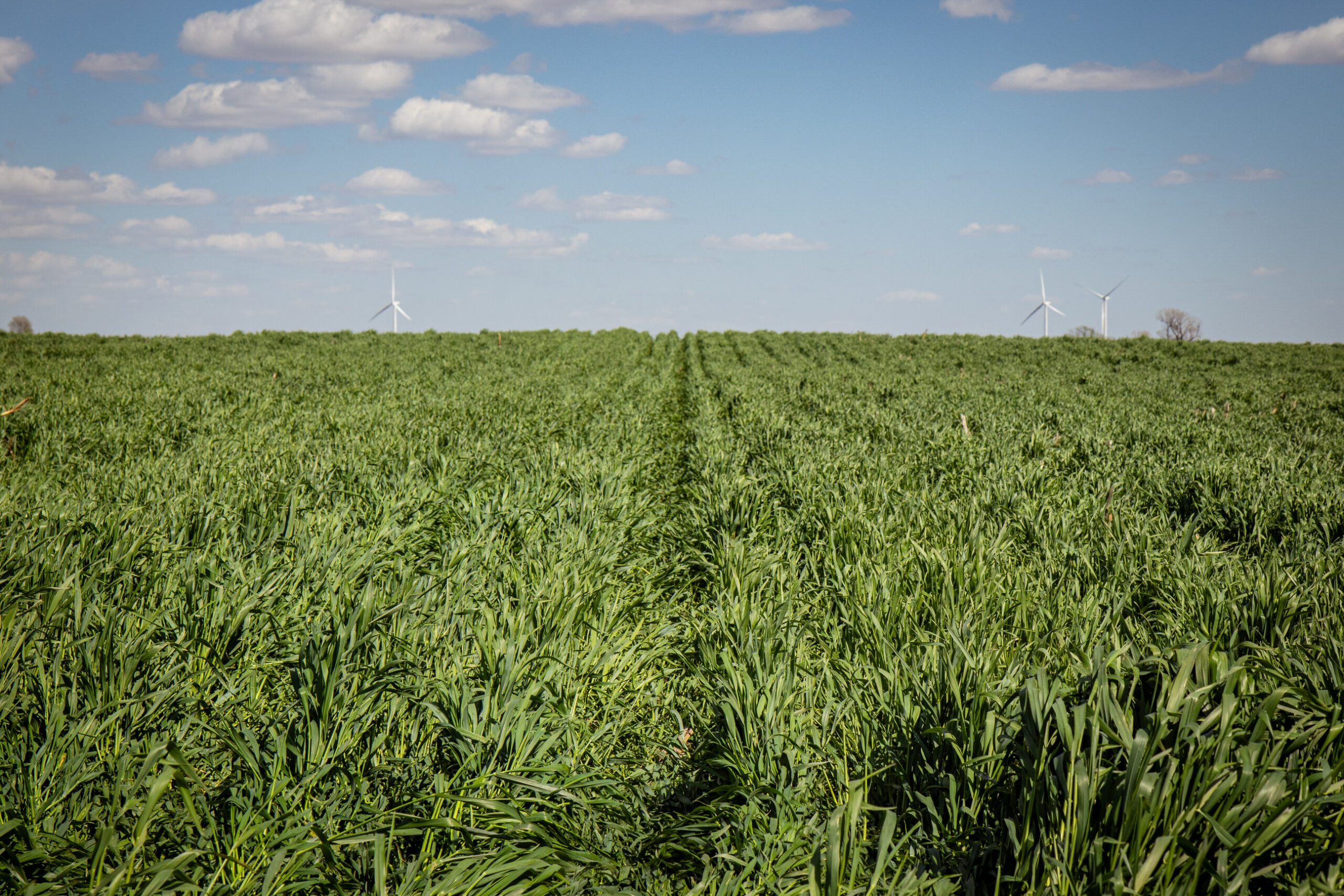
At AgSpire, we work alongside farmers and ranchers to identify practices that strengthen their operation’s efficiency, productivity, and longevity. One of the most effective we see in action on the ground is cover cropping.
When planned carefully, cover crops do more than fill time between cash crops. They actively manage nutrients by capturing, cycling, and returning them to the soil, so fertilizer dollars stretch further and soil health improves year after year.
In this article, we share how the link between cover crops and soil nutrients can benefit your land, livestock, and business.
A Benefit to the Land
In the upper Great Plains, declining soil productivity is a major challenge. Cover crops help reverse that trend by rebuilding soil health and restoring balance.
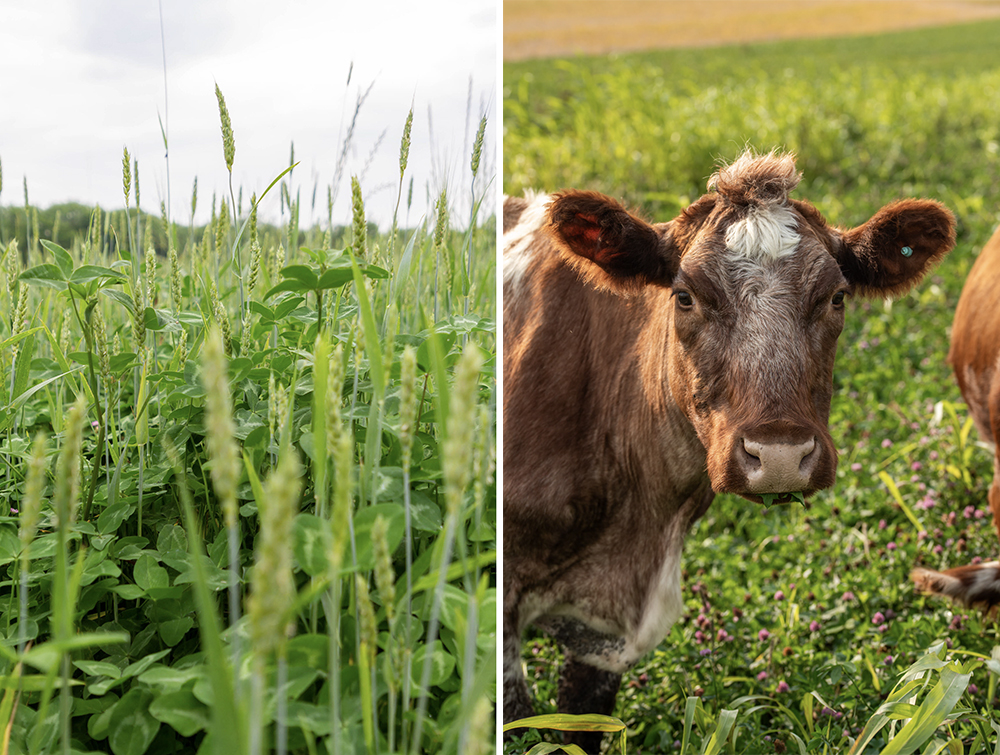
- Fixing Nitrogen: Legumes such as common vetch and Balansa clover capture nitrogen from the air and hold it in their tissue. As that residue breaks down, the nitrogen moves into the soil and becomes available to the following cash crop. Nitrogen your crop picks up that way is nitrogen you do not have to buy.
- Recovering Nutrients: Deep-rooted crops like radishes and turnips pull nutrients from deeper soil layers, making them available to the next cash crop instead of losing them to leaching.
- Holding Nutrients in Place: Keeping fields covered stabilizes soil and nutrients, supporting microbial activity year-round and preventing loss from bare ground.
- Moving and Holding Water: Living roots keep soil open so rainfall soaks in instead of running across the surface. Runoff carries nutrients off the field with it. Soil that takes water in and holds it keeps nutrients within reach of the roots, and nutrients sitting in dry soil are not available to the crop no matter how much is there.
- Suppressing Weeds: A cover crop stand takes the space and light weeds need to get established. Weeds compete for the same nutrients the cover crop just cycled, so holding them back puts those nutrients in your cash crop instead.
- Breaking Pest Cycles: Working cover crops into the rotation interrupts pest and disease cycles that build under continuous cropping. A root system damaged by pests cannot take up what the soil is holding.
Each of these actions improves nutrient cycling and builds healthier soil, which can reduce the need for additional fertilizer inputs.
A Benefit to Livestock
In our programs, most cover crops are grazed or hayed. Producers select mixes that offer strong forage value and good nutrition.
Cattle trampling biomass into the ground and returning nutrients through manure accelerates the natural fertilizer cycle. Instead of nutrients being lost, they are recycled back into the soil, cutting the need for additional inputs while improving forage availability for the herd.
This makes cover crops a dual-purpose tool. They support both soil and livestock health while strengthening the overall crop rotation system.
A Smarter Business Decision
Cover crops are more than a soil health practice; they’re a smart business decision. By improving nutrient availability and reducing fertilizer dependence, cover crops directly support the bottom line:
- Lower reliance on synthetic fertilizers and herbicides.
- Reduced feed costs when used as forage.
- Extended grazing season and fewer purchased hay bales.
Over time, a good crop rotation strategy with cover crops can protect your bottom line and increase operational resilience.
Ready to put cover crops to work?
If you’re curious about how a crop rotation plan with cover crops could benefit your operation, we’d love to help. Fill out the form below or call/text 605.675.7255 to get started.
Additional Links
AgSpire Advisor Austin Knight shares more about nutrient management in this short video >>> AgSpire YouTube Channel
Learn more about soil health and its benefits for your operation >>> Soil Health: A Practical Advantage for Your Farm