
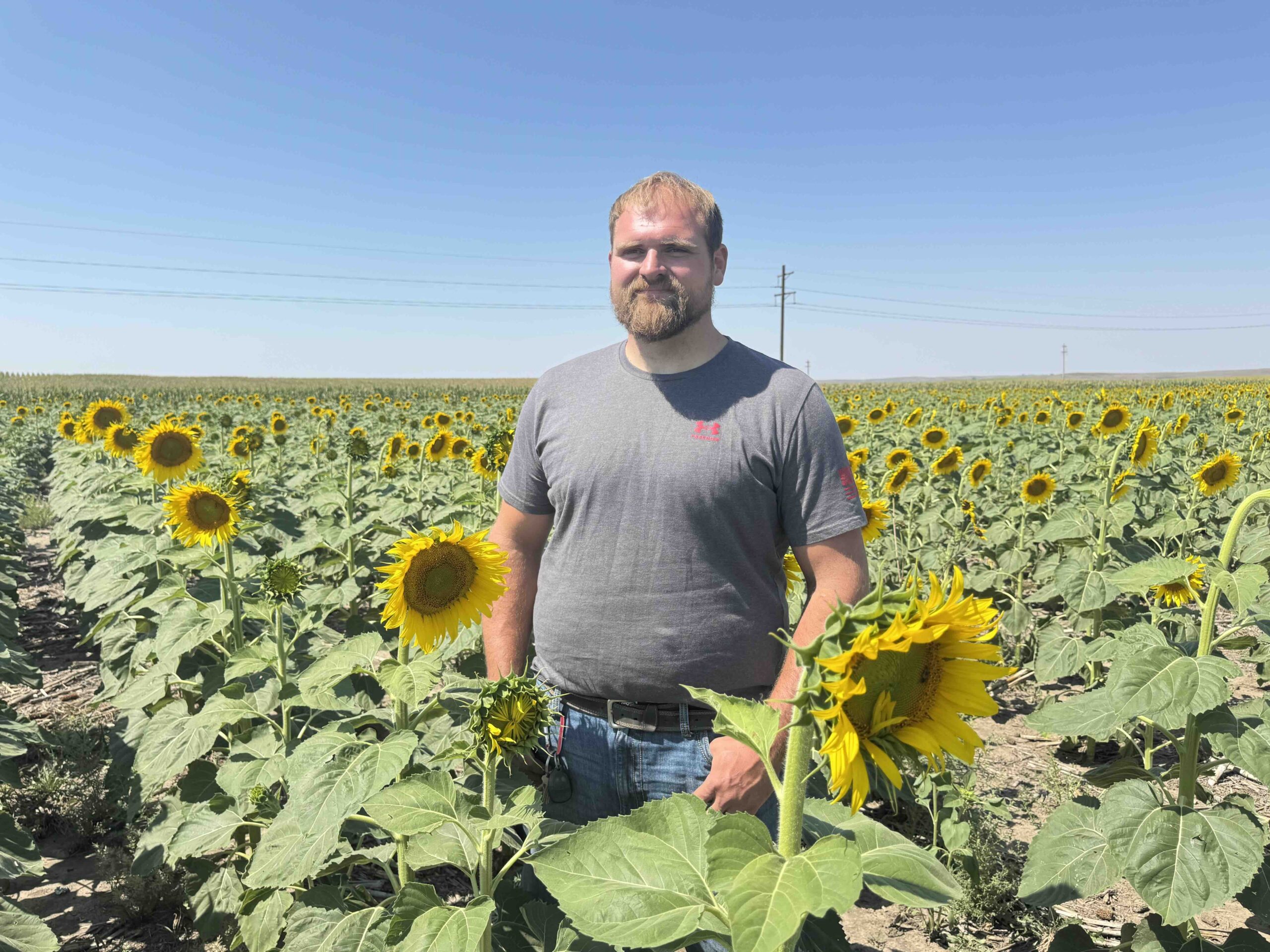
By Lura Roti for AgSpire
The Rous family have farmed in South Dakota since homesteading days.
They survived the Depression. They survived the 80s Farm Crisis. But Winter 2023 it did not look like their Bennett County farm would survive the year.
“I was in the FSA office going over financials and the FSA agent told me, “if you don’t change something, this is not going to be a thing next year,’” said Sawyer Rous of the tipping point for their farm. “I was like, OK. Thank you. I’ll make a note of that.”
Just a few months shy of his 27th birthday, Rous knew the Farm Service Agency professional was correct.
“I looked at the numbers, and I knew it was up to me to turn things around,” he said.
Rous had made a similar statement to his dad a few years earlier.
“I put my foot down and said, we either get a no-till drill or we sell everything and be done because if we are not going to do this to actually make a living, I’m out,” Rous recalled of the conversation he had with his dad, Dan and brother, Patrick.
Conventional tillage equipment had been a controversial topic among the men for a few years now. A hoe drill was actually how Rous and his brother Patrick ended up in partnership with their dad, Dan.
“Before dad bought it, I asked him, “why aren’t we no-tilling? All the neighbors are no-tilling, and they are all making money,” Rous said. “But I wasn’t farming with him at that point, so I had no say in anything, so I thought, “I’m not invested in the farm, it’s not my money, not my business.’”
Dan bought the hoe drill.
The next two springs it was too wet to plant.
“We could not get into the fields to plant sunflowers. And that was the one crop that was going to make money. So, when it came time to make the loan payment on the hoe drill, dad could not make the payment. And the banker suggested Patrick and I get involved so we could take on a share of the debt.”
That was 2017.
“For five years nothing changed,” Rous said.
Except the weather. Summer 2022 the farm was in an extreme drought.
“I looked around at the neighbors going, “how are they making it and we are not. How are they getting 100-bushel-an-acre corn and we’re only getting 40?”
To Rous the answer was clear – the neighbors were managing their fields with no-till and other soil health farming practices that helped the soil retain moisture instead of releasing moisture with every pass of the chisel plow.
“We actually farm in a desert here in Western South Dakota – yes, we did have a few extremely wet years, but that is rare,” Rouse explained. “We actually have some fields that are sand – but we farm on land across 30 miles so we farm every type of soil you can imagine: sand, clay, heavy bottom ground, good ground and white chalky hills – honestly sunflowers are the only crop that can grow in all these different soil types.”
Yields don’t lie
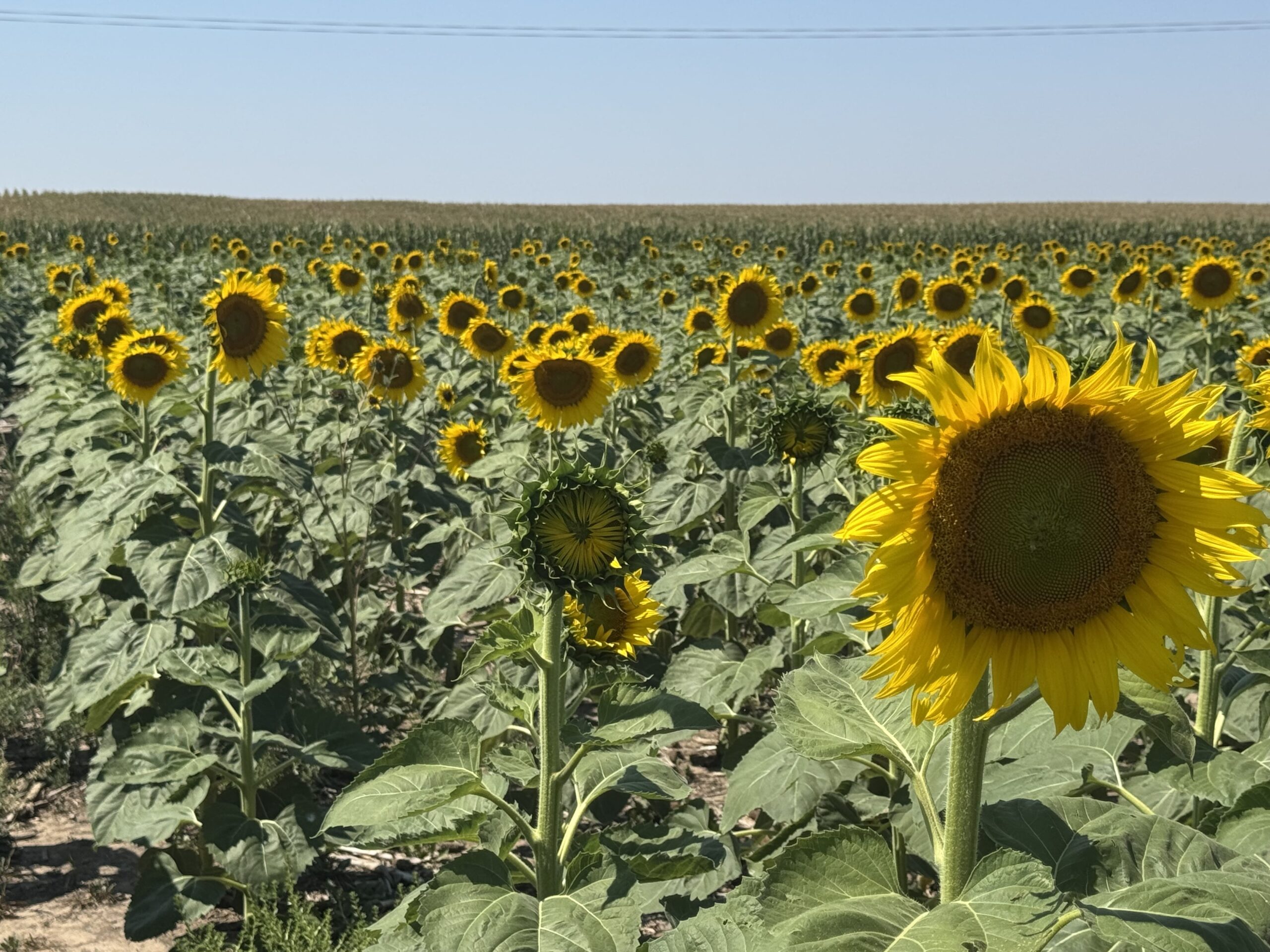
It’s the third week in August and the family’s fields of sunflowers are in full bloom. And even though Bennett County is in an extreme (D3) drought, their corn, though clearly stressed, made ears.
The family has been implementing no-till and other soil health-friendly field management practices for three years now.
“Last year dad said he wished he’d gone no-till 20 years ago,” Rous said.
And this year, even though their yields will be dramatically impacted by drought stress, the family will turn a profit. They know they will do more than breakeven because in addition to changing their field management practices, Rous began keeping meticulous financial records.
“I watched a guy on TikTok who talked about the fact that in 10 years, 50% of family farms will go under because they don’t know their numbers,” Rous said. “And I thought, “we don’t know our numbers. I need to change this.”’
He created spreadsheets for every commodity and kept track of all income and expenses. Rous began using this information to forward contract the family’s commodities.
Since 2023 the three men have farmed together in an equal partnership.
“Now I know what I need to get from each commodity market to cover the expenses it takes to raise it. And if I can’t afford to apply as much fertilizer as I would like to apply, then I reduce it,” Rous said. “Knowing our numbers takes the stress off because we know if we are going to make a profit or not. We know what we need to do as far as crop insurance goes.”
Getting through no-till learning curve depends on sound advice
Transitioning to no-till was not simple.
And things did not improve overnight.
Rous said there was a learning curve – but his community got him through it. With help from neighbors, soil health social media influencers and AgSpire, a company that provides crop and livestock producers with technical and financial assistance to help with costs associated with regenerative agriculture and conservation practices that contribute to more resilient cropping, grazing and herd management systems, Rous was able to get the advice and technical assistance he needed.
“I learned to talk to anybody and everybody,” Rous said. “This is one huge puzzle, and each person has a piece to share to help solve it. So, I talked to neighbors – my neighbor Paul Winters gave me advice on planting depth, getting a no-till drill and more.
“I went to social media – there’s a lot of soil health guys on TikTok – and I talked to AgSpire and they helped me get into cover crops.”
“I wanted to plant cover crops because our equipment is not big enough to plant all our acres into crops that I want to plant, and I don’t like open ground,” Rous explained. “I want to have a living root in the ground because it helps the soil biology. Cover crops also allow me to sell a forage crop. It’s nice to have another revenue source.”
Along with helping with the soil’s biology, cover crops prevent wind and water erosion and help create soil structure, increasing water infiltration into the soil profile, explained AgSpire Senior Conservation Agronomist, Derek Ver Helst.
Rous visited with Ver Helst about the practices he was interested in implementing to benefit his farm’s soil health, and in his role as a Technical Advisor for AgSpire, Ver Helst helped Rous enroll in programs that provide him with practice-based incentives. Through the practices, Rous receives a seeding incentive for each acre of millet contracted and a per pound premium when he fulfills his millet seed contract.
“In my role with AgSpire, I visit producers’ farms and ranches so I can understand their operational goals and see if there are ways they can increase efficiencies through conservation practices,” Ver Helst explained. “While learning about their operations I try to match their goals with the technical and financial assistance we offer to help make the transition to implementing conservation practices as smooth as possible.”
Because paperwork can be challenging, Ver Helst also helped Rous fill out the necessary forms to qualify for the practice.
“Derek made enrollment and participation easy,” Rous explained. “The AgSpire team helped me fill out the paperwork.”
Paying it forward comes full circle
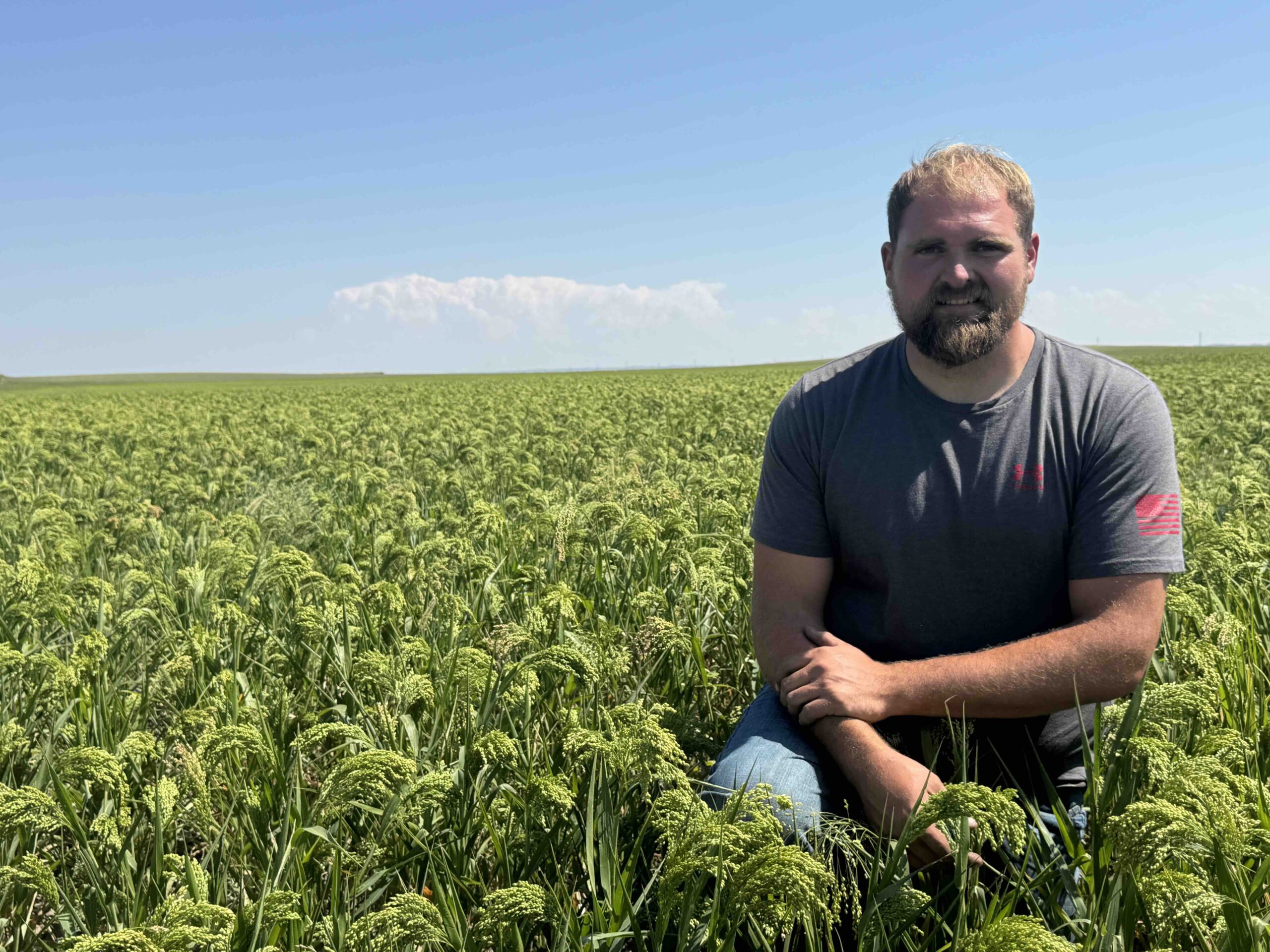
The Rous family has been raising forage millet for more than 50 years.
“My grandpa, Bly, went to Colorado looking for a crop that would do well here, and he came back with Huntsman millet seed. We have been saving the seed back every harvest and raising millet ever since.”
For decades, in addition to hay, the family raised the drought-tolerant, hardy grain, millet, as a feed supplement and forage for their own cow/calf herd.
After they sold the herd in 2021, Rous began selling the grain millet to a seed company and began looking for a cattle producer who could use the hay.
“I wanted to sell to the same producer every year because I knew that the hay market is a very volatile market and I did not want to have to look for new customers every year.”
He connected with a Wyoming rancher. At the time the hay market was at an all-time high due to widespread drought.
“The market was $120 a ton and I sold the hay millet to him for $85 because I knew his kids were returning to the ranch and they were trying to make things work,” Rous said.
Rous explained that because the AgSpire incentives helped him reduce cost and risk of planting cover crops, he was able to pass on the savings.
This year things were looking up for the Wyoming rancher and his family when Rous talked to him about his hay needs.
“He told me, ‘you have no idea how much your hay has helped us get through. … . It all goes back to being neighborly,” Rous said. “You gotta help your neighbors and your friends. And do the right thing.’”
As his family’s farm revenue has improved, Rous has introduced other young farmers to AgSpire.
“I got my friend, JD, into AgSpire,” Rous said. “Like me, he’s a young farmer, and I am someone who believes you gotta spread the love.”
I can see a future here
A lot has changed since the FSA meeting three years ago. When Rous reviews the farm balance sheets, he sees positive numbers and feels optimistic about the future.
“It is encouraging that we have no-till established and see the benefits of cover crops come to reality in the fields,” Rous said. “I know there will be more challenges tomorrow, but there will also be opportunities to help solve those challenges.”
To learn more and watch a video of Rous, watch the video below:
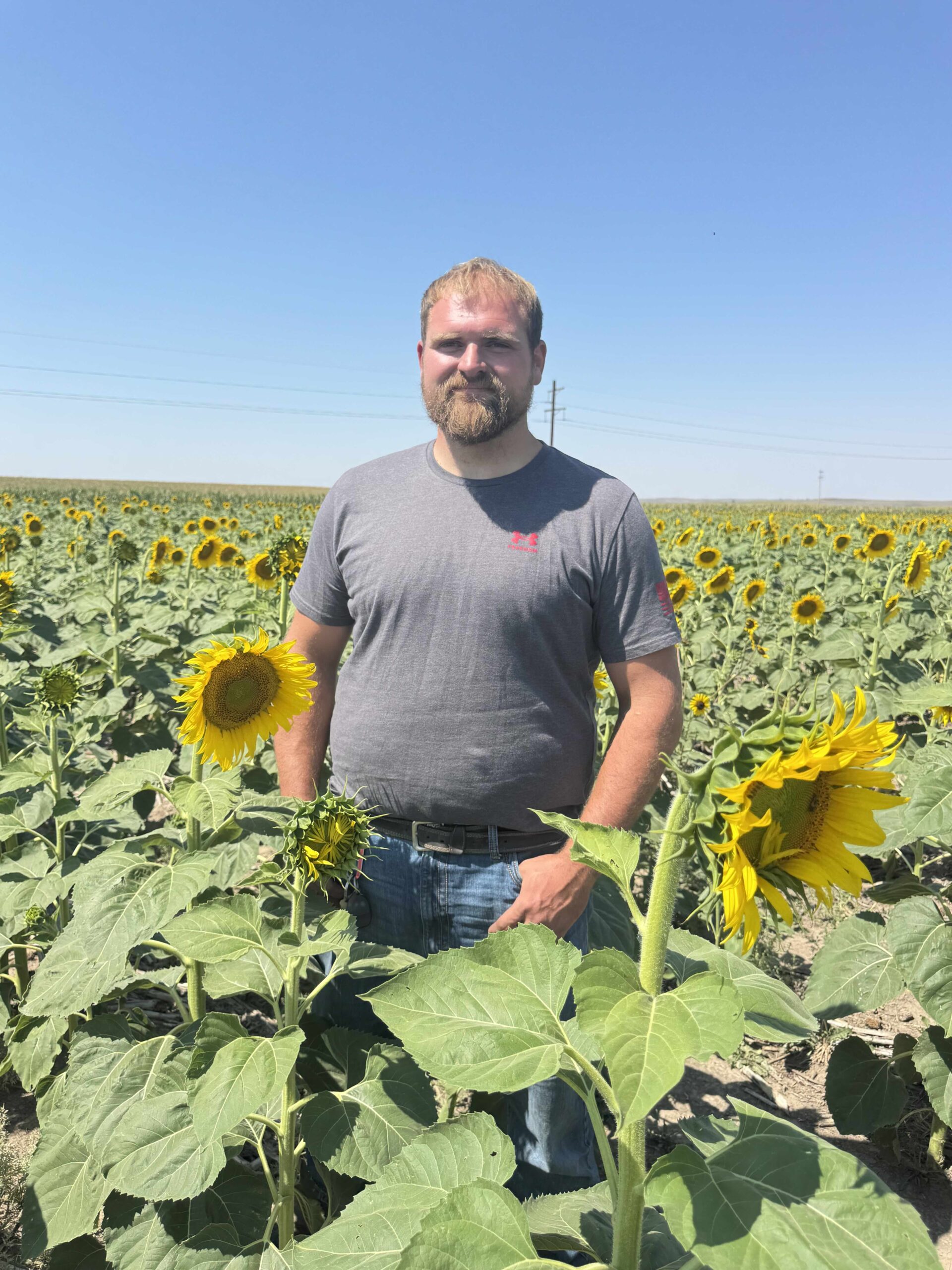
Hear from Sawyer
When a Farm Service Agency loan officer told Sawyer Rous his family farm had to turn things around, the fifth-generation South Dakota farmer switched to no-till and started asking bigger questions about soil fertility and how plants work. Today he plants cover crops with AgSpire to keep a living root in the ground as long as possible, giving fields a rest while feeding the soil life below. With AgSpire handling the program paperwork, Rous has one less hat to wear and more time to focus on running the operation.