
By Lura Roti for AgSpire
At only 27, cattle producer, Damon Becker has accomplished a lot since 2020.
He expanded his cattle herd by 250 head.
He converted all his crop acres to forage.
He built a calving barn.
He updated fencing and other infrastructure throughout his family’s century-old Faulk County, South Dakota farm.
But Becker hasn’t had much time to think about what he’s done in the years since graduating from South Dakota State University with an Animal Science degree because once he committed to raising cattle and forage full-time, his focus has been on the future.
“I don’t get time to reflect because it is always on to the next thing,” Becker said. “When we sell our calves in January, I’m checking cameras as I walk out of the sale barn because we have heifers that are calving. I don’t have time to take in the 10,000-foot-view and appreciate things as much as I’d like to.”
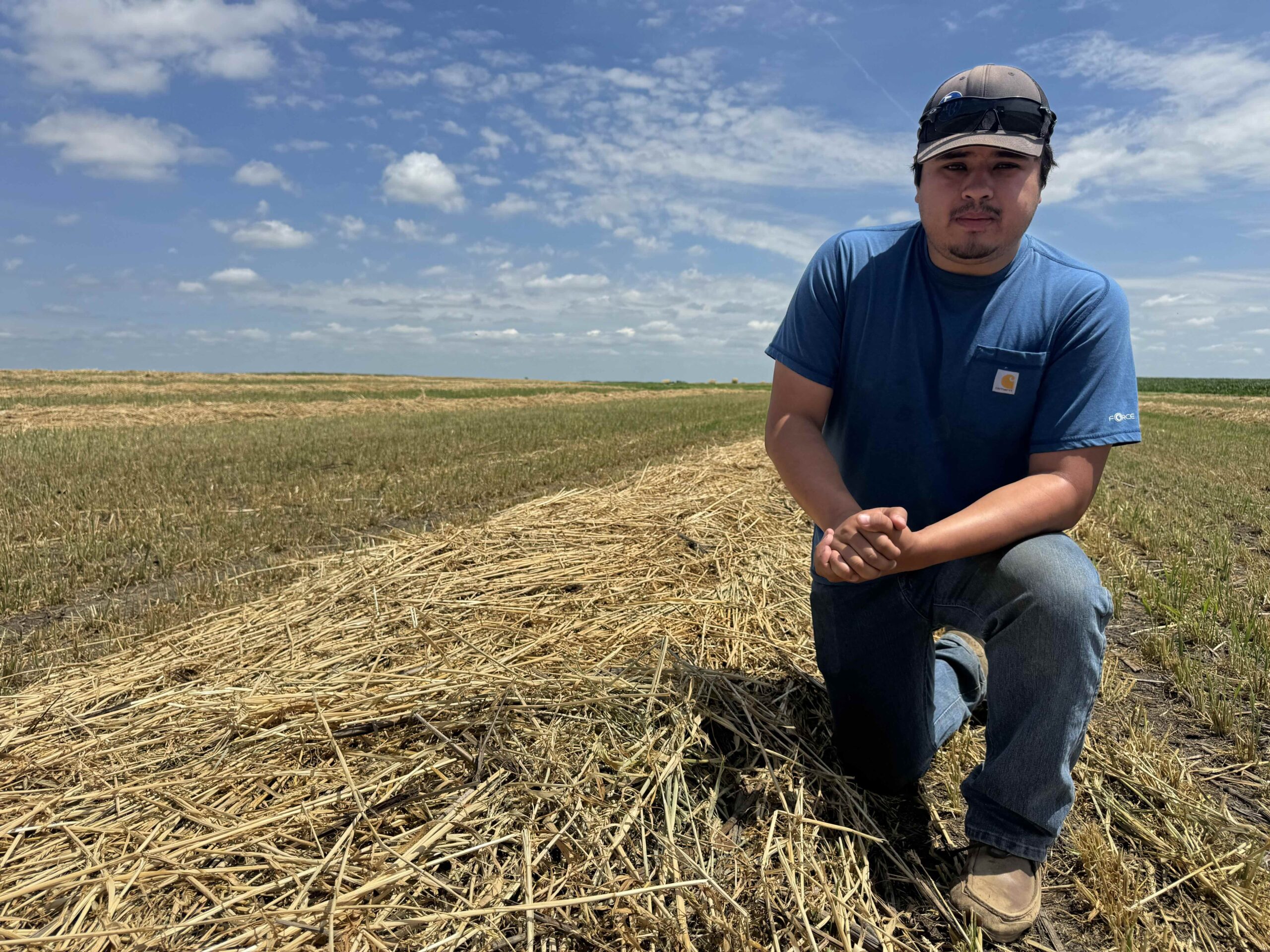
It’s a humid July day when Becker takes a few minutes to sit down and share his story. Right now, his focus is on baling forage barley so he can drill in a cover crop blend for fall grazing.
“Barley makes really good cow feed. It’s a prolific hay producer. It’s easy to dry and the cows love it,” he said. “Once its baled, I’m going to drill in a mix of sorghum Sudan grass, some brassicas and some legumes. The plan is to bring in some diversity to help the soil.”
This plan has been in place since September 2025. Becker may not have time to reflect, but he certainly makes time to plan.
“Nothing I do on this farm is ‘winging it.’ Every decision is based on research and calculated planning,” said Becker on the management philosophy he has implemented since he took out his first Farm Service Agency loan to buy 180-head of cattle and got his family’s blessing to begin raising cattle and forage fulltime.
“I thought if I worked off the farm, I would not be able to do the quality job that I think I can do because I’d be worrying about my 8-to-5 job and the farm would suffer,” Becker said. “To use a baseball analogy, I’m going to go 100 percent at this and swing as hard as I can. If I fail, I know at least I really tried.”
A fifth-generation farmer, Becker acknowledges he wouldn’t have the career he loves today if it were not for the sacrifice of his Grandpa Bill Sr. and dad, Bill Jr.
The 1980s Farm Crisis forced his grandpa and dad to work full-time off the farm. Their careers saved the farm.
“There is no way I could make this whole thing work, if I had more than my cattle and equipment payments. I can make this work because I don’t have a land payment, a house payment or a family,” Becker said. “It doesn’t take much to cover me and my dog, so I can invest everything back in the cattle and land.”
Becker and his Australian Sheppard, Lucca, live in a small apartment in the farm’s new calving barn. He built the calving barn in 2023 after a devastating calving-season blizzard.
Out of the box focus on forage
Growing up, haying was the chore Becker dreaded. “I’d be out in the pasture with ruts, going 5-miles-per-hour trying to avoid the slough or creek and beating myself up all week to get 150 bales off 140 acres.”
Today, haying is something he looks forward to. The difference? He is haying on what was farm ground. In 2024 Becker converted all the farm’s crop acres to forage blends.
“Haying on converted crop ground is so efficient and fast. I can start mowing 140-acres after lunch and get done well before dark. Then, dad will come over and rake after work and be back to his house before 9,” Becker explained.
It’s a good thing Becker enjoys haying because it takes up much of his time June 1-Sept. 30.
“I believe hay is a much better use of this land. And better for cash flow because I’m marketing it through cattle,” said Becker of his commercial cow/calf herd. “There are years, like 2019 or 2023, when the land was drowned out and I would not be able to get a traditional crop planted.”
To maximize forage quality and tonnage, Becker is intentional about the forages he plants on each acre.
“I enjoy educating myself on the different species’ varieties and what they can do and then I choose varieties, whether its annuals or perennials, to do different things based on what the soil needs,” Becker said. “If there is an area of the field that is prone to flooding, I will plant Japanese millet there because it is not going to drown out. And there’s some good quality, racehorse grasses that will give me multiple cuttings and other grasses with deep roots to help with water infiltration.”
An understanding of forage species and cover crop mixes allows Becker to extend the growing season on his acres.
“When everyone else is dusting off their planters the first or second week of April, I’m the weird guy who is out drilling in a spring cereal – almost frost seeding. I like it because I’m getting forage in the ground to best utilize the rain.”
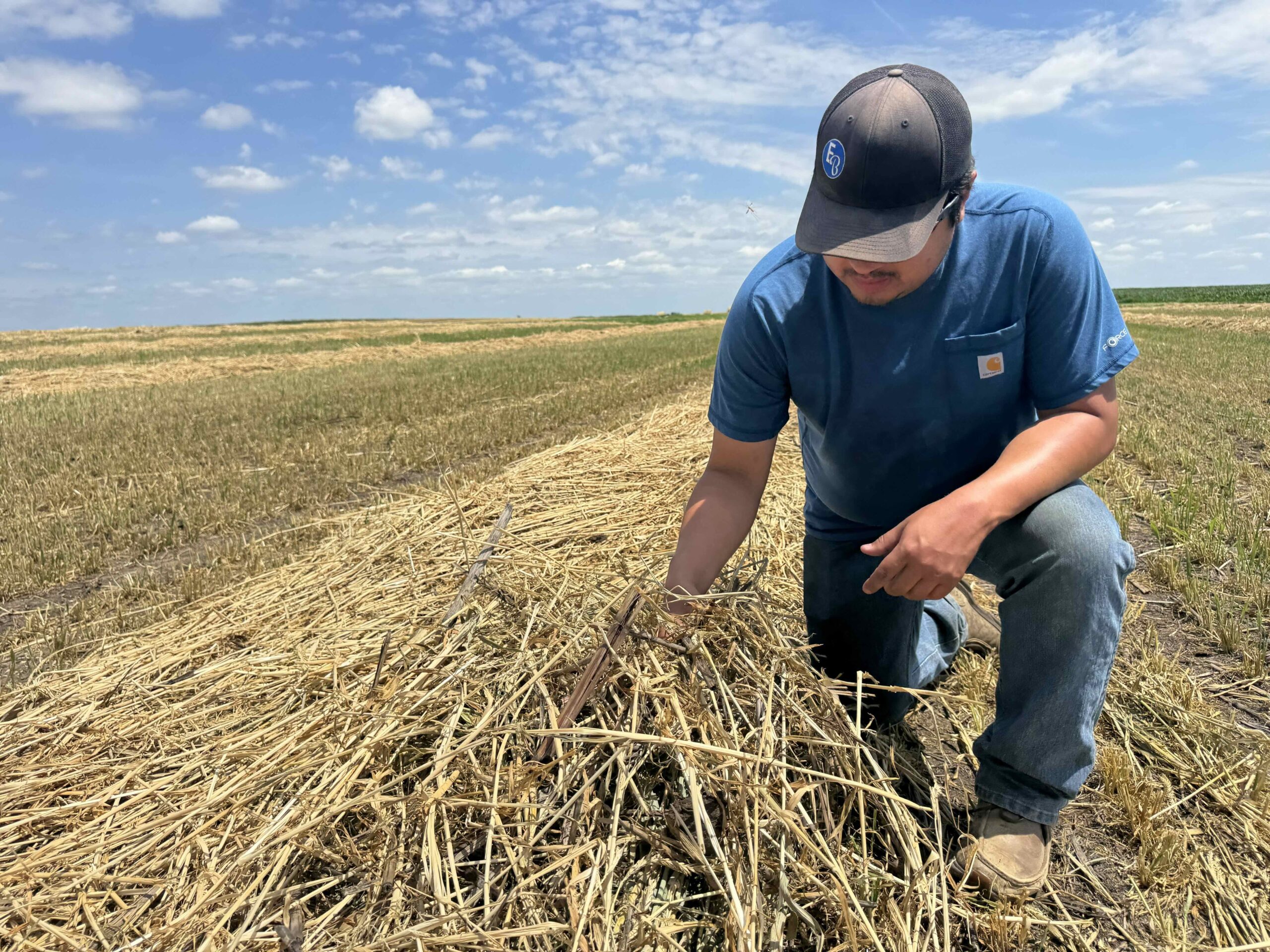
This summer the forage barley he “frost seeded” yielded 4.5 tons per acre. After it’s baled, Becker will drill in a warm season cover crop mix that his cattle windrow graze.
“I cut the cover crop late fall, right before the frost to preserve the forage quality, but it also increases harvest efficiency,” Becker explained. “If the cows were to go out and graze it standing, they’d waste a lot.
“I’ve also done some drone interseeding of legumes into existing pasture to increase the tonnage and fix some nitrogen in the soil – so giving the cows something good to eat and I’m making the soil better,” he said.
As he shares his forage management strategies, Becker’s passion is evident.
“I like being a little creative and try some different ideas with forages,” Becker said. “I do think for many producers, forages get put on the back burner and are kind of an afterthought. But if you are willing to do the research and do the leg work to find the best varieties and mixes, you can really increase your production and take advantage of the cattle market we’re feeding these forages through.”
Forage-geek collaborates with cattle-enthusiast
Becker spends hours researching and thrives on strategizing new ways to bolster his forage yields and quality.
“I’m a bit obsessive about forage research. But it’s something I feel like I have to do myself because in South Dakota there is a very small pool of people who study forages, which is sad because we are one of the top states in forage production,” Becker said.
About a year ago, this forage-geek connected with Mitchell VanderWal, who has worked as a Producer Advisor for AgSpire since 2025. AgSpire is a company that provides crop and livestock producers with technical and financial assistance to help with costs associated with regenerative agriculture and conservation practices that contribute to more resilient cropping, grazing, and herd management systems.
“I appreciate that I can bounce ideas off of him,” Becker said. “Or if I’m 50/50 on the fence about something, I can ask what Mitchell thinks about the idea. It is nice to have someone who is as knowledgeable about forages as me to talk about risks and benefits with.”
Like Becker, VanderWal spends a lot of time focused on maximizing forage production.
“I can honestly say I’m a cattle enthusiast, I appreciate forages because of my love for cattle,” explained VanderWal, who grew up on a cattle farm near Howard and still enjoys judging cattle shows on the weekends. “I have learned so much from Damon. It’s so fun to work with him because of his passion for livestock and forage production.”
Partnering for cashflow
Becker was motivated to convert the farm’s crop acres to forage the year he had to purchase hay to feed his cattle. “I hated it. I hated everything about it. Yes, I did my research, and I had the hay tested for quality, but it was a hassle and it was not something I ever wanted to do again.”
Together with his dad, Becker invested in hay equipment. Since Becker began managing their farm’s crop acres for forage production, he has not needed to purchase hay even though his cattle herd has increased in size.
And with VanderWal’s help, Becker began participating in an AgSpire program which provides per acre payments to help offset input costs associated with establishing new forage production or improving existing production.
“The resources AgSpire provides allow me to make the best decisions without worrying about cash flow,” Becker said.
AgSpire offers payments and technical assistance on practices designed to assist livestock producers and crop farmers in their efforts to increase forage production on their operation through planting forage cover crop mixes or forage perennials. Each practice has a set dollar amount producers can utilize toward implementing and maintaining it.
“The incentives AgSpire provides give me more flexibility and more opportunities to make that hay crop even better without having to crunch numbers all the time,” Becker said.
To learn more the Decker farm, watch the video below:
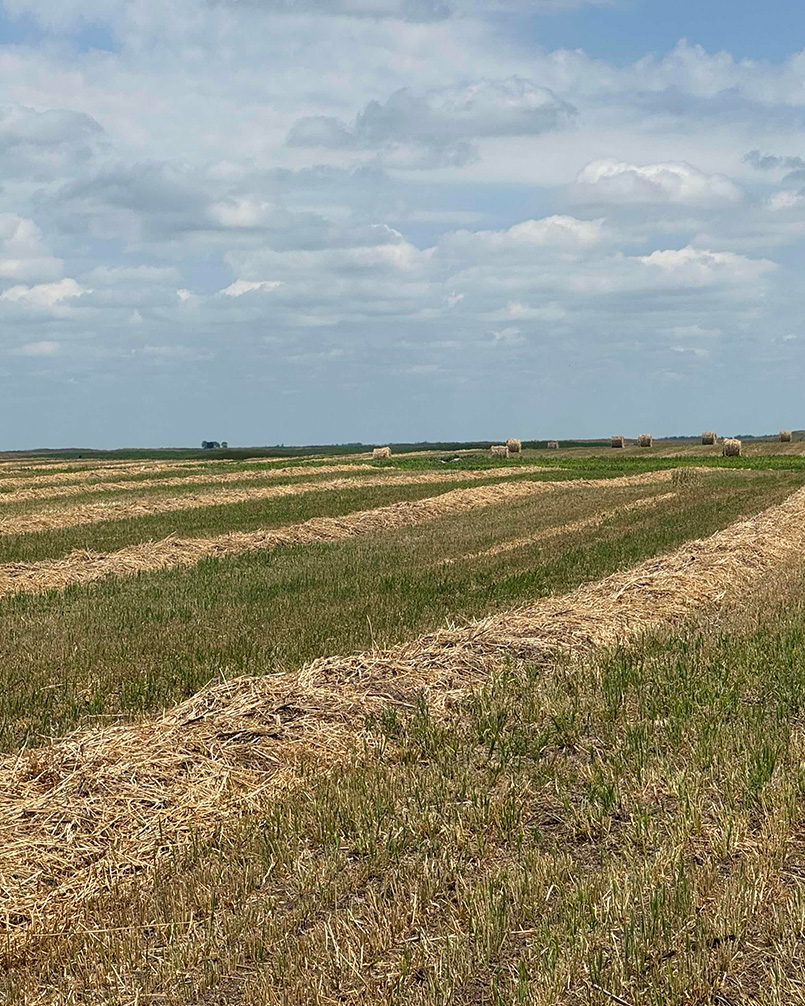
Hear from Damon
Damon Becker is a fifth-generation cattle producer near Faulk County, South Dakota. Since 2020, he has converted every crop acre to forage blends. In this video, Damon shares how AgSpire's programs offered support and incentives to promote his operation.