Part 2
By Derek Ver Helst, Senior Conservation Agronomist, AgSpire
We’re back with Part 2 of Pasture Conversion: Overrun to Production – a first-hand account from Derek Ver Helst, Senior Conservation Agronomist with AgSpire, who worked with a producer in 2025 to turn a 5-acre pasture overrun with smooth brome into a productive native tallgrass prairie with trees and pollinator habitat.
The Growth
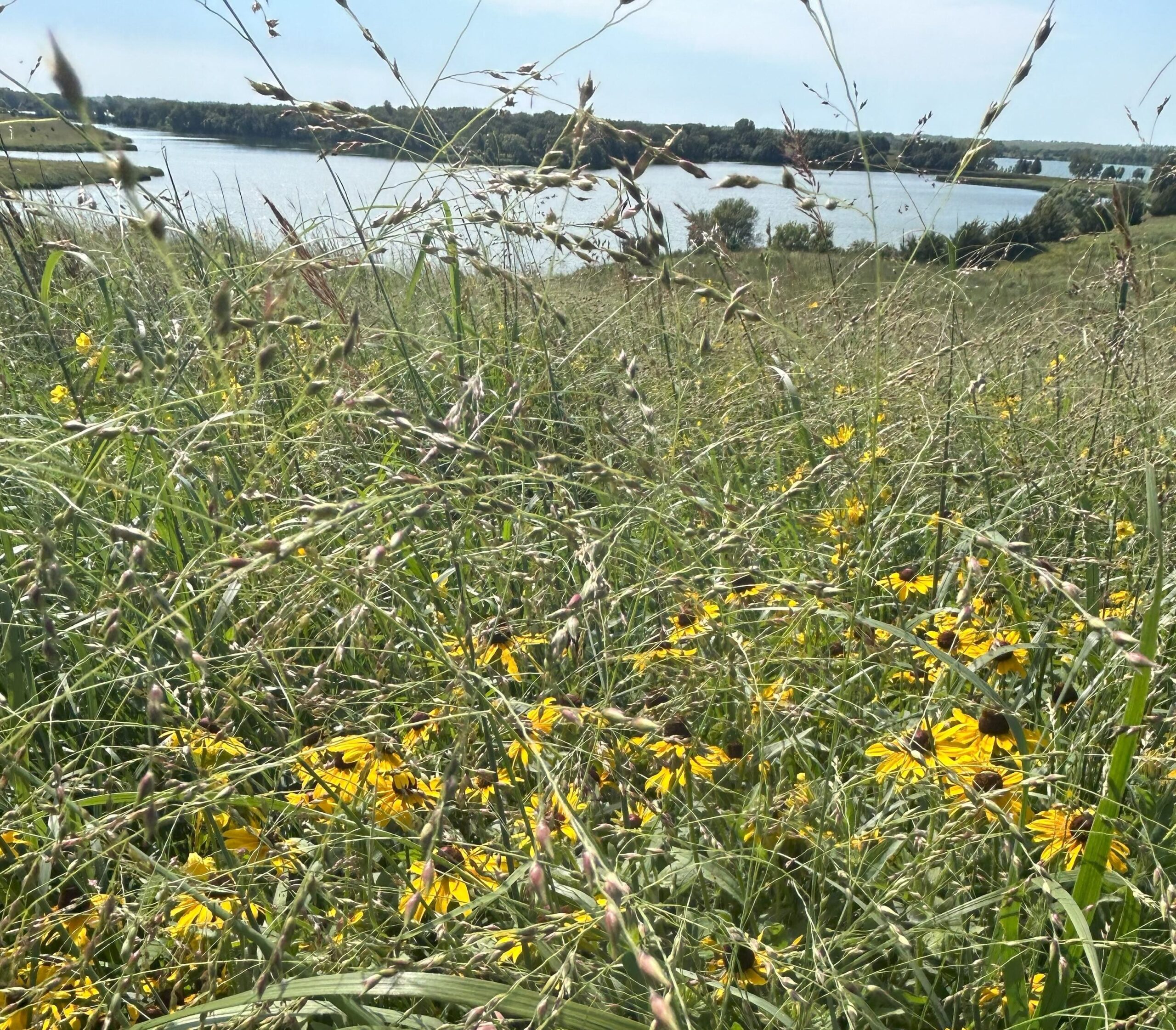
On August 18, 2025, Derek went back to the pasture to record the progress and make any adjustments to the plan.
The 2025 growing season was very wet. We received above average rainfall in the northern great plains, for most of the summer, which created ideal conditions for a diverse, native planting. Cooler-than-normal temperatures prolonged germination and slowed early season growth. Early in the season, many producers in the area questioned whether germination had been successful.
As the summer progressed, soil activity and plant life responded quickly. The rains continued, creating idea conditions for germination and growth of the many different species that were planted.
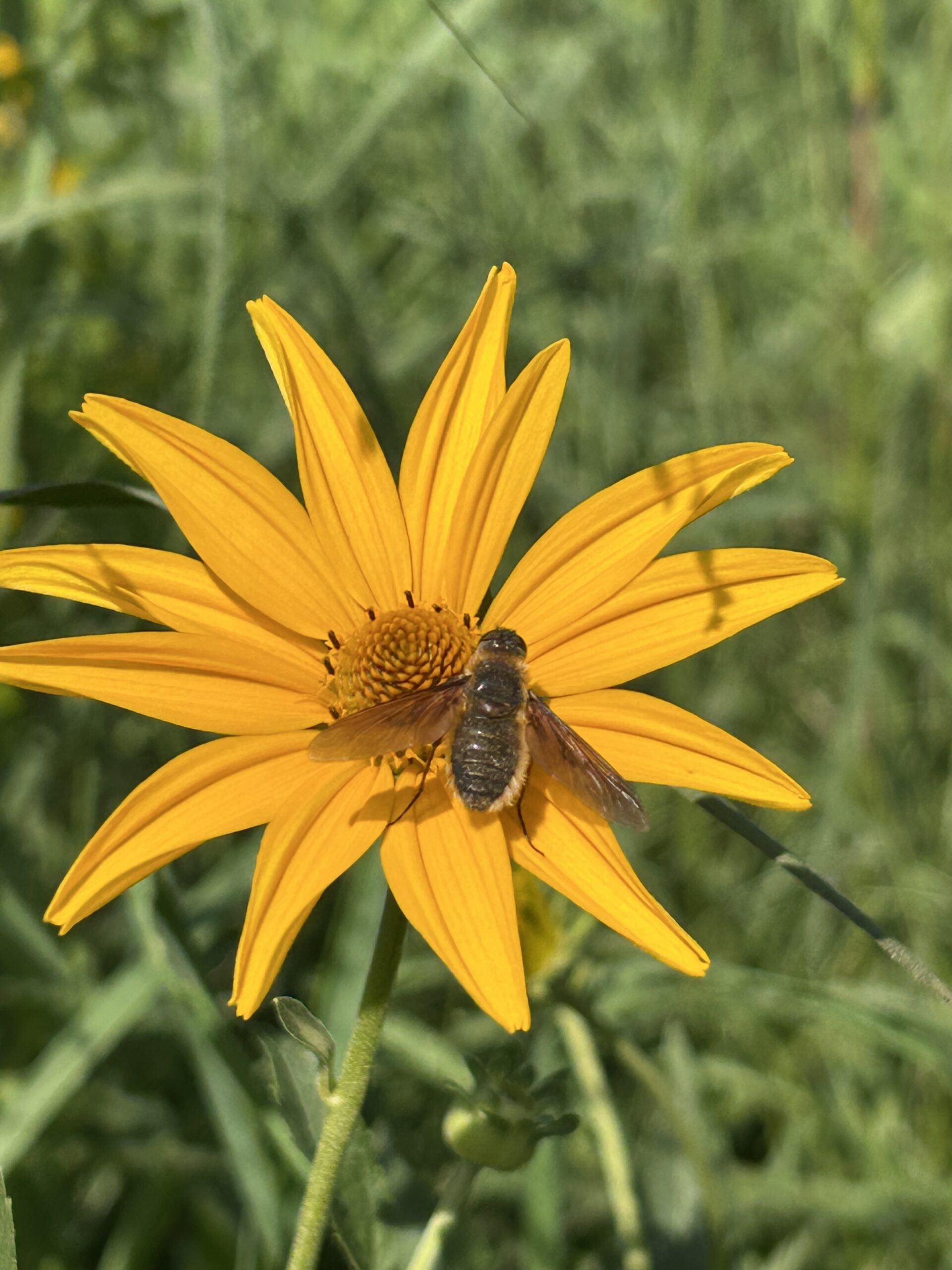
After returning to the field, expectations of a good stand were quickly exceeded. The multispecies planting had taken hold tremendously and the area was teeming with life. Birds, bees, crickets, snakes, deer, rabbits and more were all using this little piece of paradise.
The Progress
Initial concerns around erosion, due to both heavy rainfall and field slope, did not materialize. The practices used meant no gully erosions occurred, and the topsoil stayed where it was intended. Forbs and grasses established vigorously, to the point that surrounding trees required trimming to ensure adequate light. A field walk confirmed the successful establishment of many of the species planted earlier in the spring.
It’s important to note these results are not typical. Favorable weather conditions by mother nature played a significant role in the outcome and contributed to why these practices worked so well. Native plantings normally take a couple years to fully establish and reach their full potential.
It’s off to a strong start, and there’s a lot to build on from here. Next steps will focus on how the stand continues to develop, supporting soil health, biodiversity, and wildlife habitat.
Additional Links
Want to read part one? >>> Click Here
Want to learn more about AgSpire and our programs? >>> Click Here